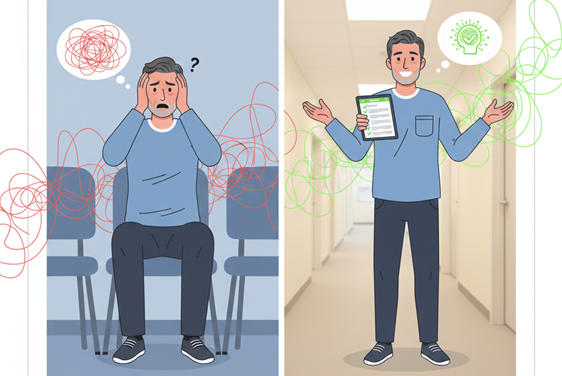
After surgery, anxiety is normal. Patients closely monitor every sensation, every visual change, and every minor symptom. How your clinic handles this emotional phase determines whether patients remain anxious or become confident advocates for your brand.
Swelling, redness, itching, scabs, or temporary shedding are all normal parts of recovery, yet they often come as a shock to patients. Even when instructions are given verbally, stress and fatigue can prevent patients from fully retaining information.
Anxiety thrives in uncertainty. When patients do not know what is normal, they assume something is wrong. Clear timelines, visual references, and simple explanations transform fear into understanding and reassurance.
Patients feel safer when the clinic reaches out first. A simple check-in message or photo request signals that their recovery is being monitored. This shifts the dynamic from reactive support to proactive care.
When patients feel guided and supported, their anxiety fades into confidence. Confident patients are more patient, more cooperative, and more likely to share positive experiences with friends, family, and online communities.
Reducing anxiety does more than improve patient satisfaction. It lowers support workload, decreases negative reviews, and increases referrals. Emotional reassurance becomes a measurable business advantage.
In conclusion, turning anxious patients into confident advocates is not about doing more surgery, but about doing better follow-up. Clinics that prioritize clarity, consistency, and proactive care transform recovery into a powerful driver of trust, loyalty, and long-term growth.